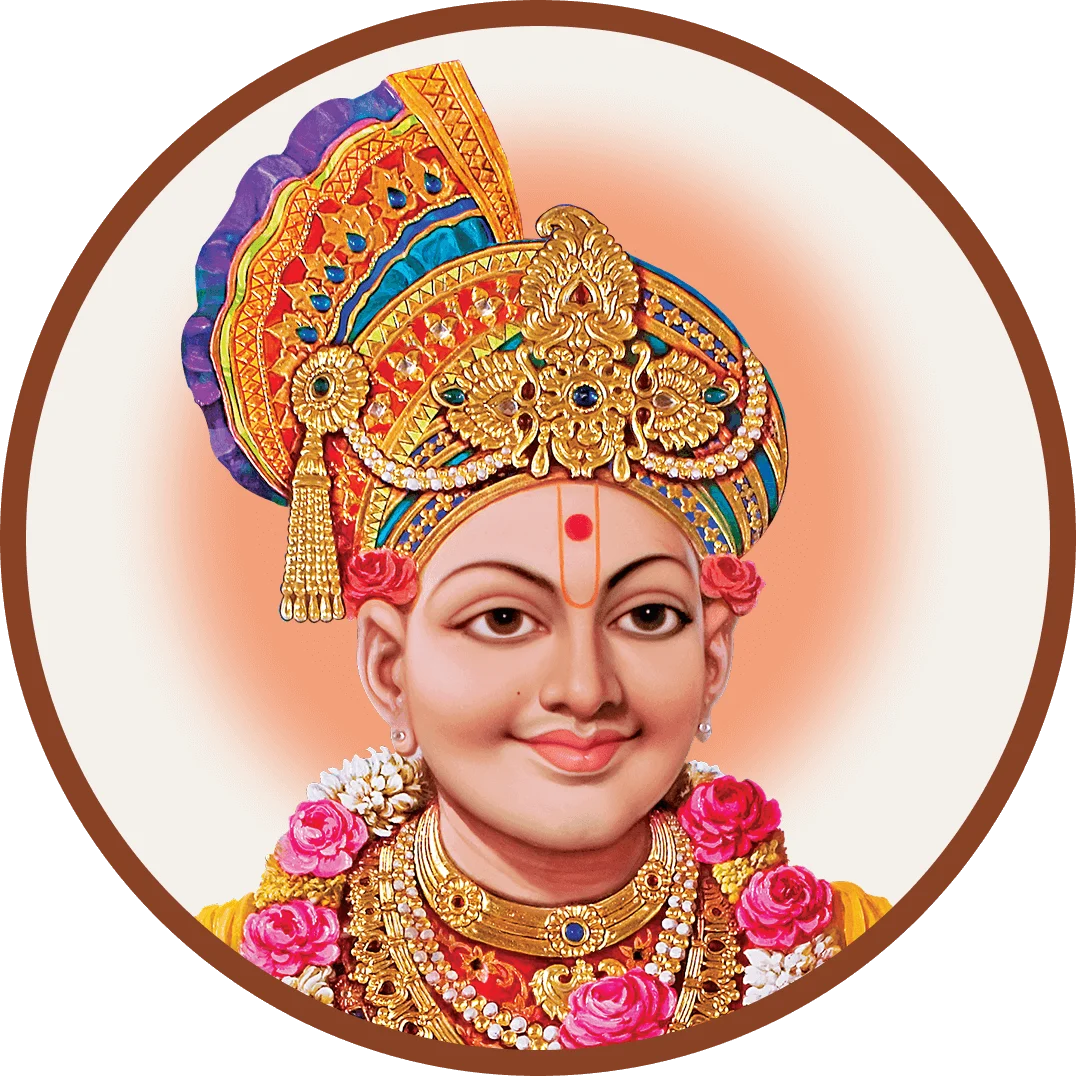
The Supreme Incarnation (1781–1830)
Lord Swaminarayan, regarded by his followers as the Supreme Incarnation of God, was born as Ghanshyam Pande to a Brahmin couple — Dharmadev and Bhaktimata — in the village of Chhapaiya, near Ayodhya, in late 18th-century India. His birth took place on 3 April 1781, which corresponds in the traditional calendar to the ninth day of the bright half of Chaitra in Vikram Samvat 1837.
According to sampraday tradition, the village elders noticed unusual signs during his infancy — sixteen sacred marks on the soles of his feet, regarded as the marks of a sovereign of the universe, accompanied by a quiet, celestial resonance in his home. For devotees, this birth represents the first time that the Supreme God, from whom all other divine forms emanate, descended to Earth in his own original, unaltered form.
Hinduism recognises an immense pantheon — tradition speaks of 33 crore deities, each with devoted followers — yet holds that all these divine forms emanate from a single Supreme God. Whenever unrighteousness has threatened human welfare, this Supreme has incarnated to protect dharma and his devotees. Swaminarayan scripture teaches that while the Lord has appeared many times through different avatars, he had never before descended in his own original form. His advent in 1781 is considered, by the tradition, that first such appearance.
The Swaminarayan tradition draws its legitimacy from several of Hinduism's oldest and most revered Vedic scriptures, which are held to have foretold Lord Swaminarayan's arrival long before it occurred. References can be found in the Skanda Purana, Brahmanda Purana, Padma Purana, Vishwaksen Samhita, and Vishnudharmottara Purana.
According to the Skanda Purana — compiled by the sage Vyasa — Lord Swaminarayan was to appear in the age of Kali, between the avatars of Buddha and Kalki, to protect dharma and those who follow it. The Vasudev Mahatmya further specifies that he would be born into a Brahmin family — to Dharmadev and Bhaktimata — and be known as Narayan Muni, following a curse placed on him by the sage Durvasa.
मया कृष्णेन निहताः साङर्जुनेन रणेषु ये ।
प्रवर्तयिष्यन्त्यसुरांस्ते त्वधर्मं यदा क्षितौ ॥४२॥
धर्मदेवात् तदा मूर्तौ नरनारायणात्मना ।
प्रवृत्तेऽपि कलौ ब्रह्मन् भूत्वाहं सामगो द्विजः ॥४३॥
मुनिशापान्नृतां प्राप्तं सर्षिं जनकमात्मनः ।
ततोऽविता गुरुभ्योऽहं सद्धर्मं स्थापयन्नज ॥४४॥
Mayā Kṛṣṇena nihatāḥ sārjunena raṇeṣu ye |
Pravartayiṣyanty-asurāṁste tv-adharmaṁ yadā kṣitau ||42||
Dharmadevāt tadā mūrtau Nara-Nārāyaṇātmanā |
Pravṛtte'pi kalau brahman bhūtvāhaṁ sāmago dvijaḥ ||43||
Muniśāpān-nṛtāṁ prāptaṁ sarṣiṁ janakam-ātmanaḥ |
Tato'vitā gurubhyo'haṁ saddharmaṁ sthāpayan-naja ||44||
Meaning: Krishna says: Arjuna and I have slain evil demons in battle, granting liberation to those who died facing Me. Those who died with malice in their hearts will, however, be reborn in the age of Kali and spread unrighteousness. At that time, following the curse of Durvasa upon Nar-Narayan, I shall Myself take birth in Kali yuga as a Samvedi Brahmin. I will destroy evil and re-establish righteousness, protecting the sages, my mother Bhakti, and my father Dharma.
दत्तात्रेयः कृतयुगे त्रेतायां रघुनन्दनः ।
द्वापरे वासुदेवः स्यात् कलौ स्वामी वृषात्मजः ॥
Dattātreyaḥ kṛtayuge tretāyāṁ Raghunandanaḥ |
Dvāpare Vāsudevaḥ syāt kalau Svāmī vṛṣātmajaḥ ||
Meaning: In Satya yuga I appeared as Dattatreya; in Treta yuga as Rama; in Dvapara yuga as Krishna; and in Kali yuga I shall be known as Swaminarayan — son of Dharma (vrisha).
पाखण्डे बहुले लोके स्वामिनाम्ना हरिः स्वयम् ।
पापपङ्कनिमग्नं तज्जगदुद्धारयिष्यति ॥
Pākhaṇḍe bahule loke Svāmi-nāmnā Hariḥ svayam |
Pāpa-paṅka-nimagnaṁ taj-jagad-uddhārayiṣyati ||
Meaning: When hypocrisy veiled as righteousness spreads across the earth, Hari Himself will be born as 'Swami' and will lift the world out of the mire of sin.
भूम्यां कृतावतारोऽयं सर्वानेताञ्जनानहम् ।
प्रापयिष्यामि वैकुण्ठं सहजानन्दनामतः ॥
Bhūmyāṁ kṛtāvatāro'yaṁ sarvān-etāñ-janān-aham |
Prāpayiṣyāmi Vaikuṇṭhaṁ Sahajānanda-nāmataḥ ||
Meaning: Taking birth upon this earth under the name Sahajanand Swami, I shall guide all My devotees to My divine abode of Vaikuntha.
महाधर्मान्वये पुण्ये नाम्ना पापविनाशके ।
हरिप्रसादविप्रस्य स्वामिनाम्ना हरिः स्वयम् ॥
Mahādharmānvaye puṇye nāmnā pāpa-vināśake |
Hariprasāda-viprasya Svāmi-nāmnā Hariḥ svayam ||
Meaning: All sins will be destroyed merely by the chanting of His name. Hari Himself will take birth as the son of the Brahmin Hariprasad Pande, known by the name Swami.
Perhaps the greatest evidence of Bhagwan Swaminarayan's supremacy is the remarkable achievements he attained during his short 49 years on this earth. He performed miracles daily during his childhood, renounced material pleasures at the young age of 11, and endured terrible hardships from nature and evil during his 7-year journey across India. Additionally, he mastered yogic principles and reached supreme spiritual heights in a manner never achieved by anyone before.
Accomplishing these feats before the age of 20, without using his supreme power or resorting to violence, is sufficient proof of his supremacy. In the subsequent three decades, Bhagwan Swaminarayan systematically established a robust Sampradaya (sect) that serves as a safe haven for his beloved saints and devotees, enabling the spread of true religion (Saddharma) and devotion.
He delivered divine and complex discourses which have been compiled into the great holy scripture, the Vachanamrut, and authored a letter of 212 precepts (Shikshapatri) that guides his devotees toward the divine bliss of Akshardham. Every thought and action performed by Bhagwan Swaminarayan was designed for the welfare of his present and future devotees. Such a Bhagwan Swaminarayan is supreme, almighty, humble, and most merciful.
The following timeline highlights the principal milestones of Lord Swaminarayan's life, dated according to the Vikram Samvat (VS) calendar traditionally followed by the sampraday.